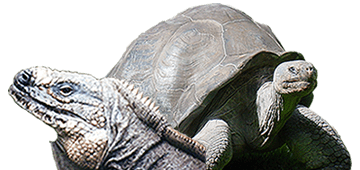
Aldabra Tortoise Care Guide: 4 to 12 Inches
A practical care guide for juvenile Aldabra giant tortoises
Written by Sam Pascucci
Florida Iguana & Tortoise Breeders
Based on approximately 40 years of experience breeding and managing tortoises
Originally published March 11, 2023 • Revised August 28, 2026
Species: Aldabra giant tortoise (Aldabrachelys gigantea)
Quick Care Summary
- Feed juvenile Aldabras in this size range every day.
- Provide a varied diet of Mazuri Tortoise Diet 5M21, leafy greens, grasses, vines, cactus and selected vegetables.
- Provide clean, shallow drinking water at all times and change it at least once daily, preferably morning and evening.
- We do not recommend routine soaking once an Aldabra is over 4 inches and is drinking freely from its water bowl.
- Provide bright light, UVB and a warm-to-cool temperature gradient. Measure temperatures instead of guessing.
- Move young Aldabras into a heated shelter when temperatures reach approximately 65°F. Rain and wind may require shelter even when the air temperature is around 75°F.
- Record the tortoise’s weight regularly. Weight loss, reduced appetite, lethargy or respiratory symptoms require prompt attention.
- Protect juveniles from dogs, rats, raccoons, ants, birds of prey and other predators.
Diet for Aldabras 4 to 12 Inches
Aldabra tortoises are grazing herbivores. Their long-term diet is based primarily on grasses, hay, edible weeds, leaves and vines. Younger Aldabras, however, have smaller and less powerful jaws and often cannot handle coarse grasses and hay as efficiently as older animals. We therefore feed juveniles a more varied and somewhat higher-calorie diet while they are growing.
Foods We Use Regularly
- Mazuri Tortoise Diet, stock number 5M21
- Spring mix and salad greens
- Collard greens
- Romaine, escarole, endive, green leaf and red leaf lettuce
- Mustard greens, turnip greens and dandelion greens
- Broadleaf weeds and other verified edible plants
- Grass and edible vines
- Spineless Opuntia cactus
- Green and yellow squash
- Pumpkin, sweet potato, carrots, green beans and bell peppers as part of a varied diet
We use a variety of greens rather than relying on one grocery-store item. Spineless Opuntia cactus can be fed from the hatchling stage through adulthood.
Mazuri Tortoise Diet
We use Mazuri Tortoise Diet 5M21 as part of the juvenile diet. It is a nutritionally balanced commercial tortoise food and provides calcium. We do not mix sweet fruit into the chow to encourage the tortoise to eat it.
Foods to Feed Sparingly
Aldabras enjoy bananas, watermelon, cantaloupe, papaya, apples and other fruits. Fruit should be an occasional treat rather than a major part of the juvenile diet. As a general limit, keep fruit and other high-sugar foods below approximately 15 percent of the total diet.
Let the stool help guide you. Excess fruit or unusually wet foods can produce loose or watery stool within a few days. Reduce those foods and return to the regular high-fiber diet.
Foods Not to Feed
- Animal protein, meat, eggs or dairy products
- Bread, crackers, candy or sugary processed snacks
- Seeds and nuts
- Avocado or avocado pits
- Any plant that has not been positively identified as safe
Some plants are toxic to tortoises, including rhubarb and tomato leaves. Use a reliable tortoise-safe plant list before allowing a tortoise to graze on unfamiliar landscaping.
Feeding Frequency and Amount
Aldabras from 4 to 12 inches can be fed every day when the appropriate foods are used.
To estimate the correct amount, offer what you believe the tortoise will eat and check the food afterward:
- If approximately 90 percent is eaten in one sitting or in less than 30 minutes, you probably did not offer enough.
- If a substantial amount of good food remains after three hours, you probably offered too much.
A rough starting estimate is approximately 5 percent of the tortoise’s body weight, but appetite changes with enclosure size, temperature, activity and season. Observation is more useful than treating any percentage as an exact rule.
Remove old food before the end of the day or sooner if it becomes wet, dirty or contaminated.
When to Introduce Hay
Young Aldabras often have difficulty eating coarse hay. We begin introducing hay as their jaws become stronger, commonly at approximately 2½ to 3 years old. Depending on the individual animal’s growth, that transition generally begins when it is around 10 to 12 inches and becomes more established by approximately 12 to 14 inches.
Hays we use include:
- Alfalfa hay
- Orchard grass and alfalfa mixed hay
- Peanut hay
We do not use Timothy hay or coastal hay as primary feed. Coastal hay may be used as bedding, although our Aldabras generally do not prefer to eat it.
Grass and suitable hay may remain available in the enclosure as the tortoise becomes large enough to eat them effectively. The long-term goal is a grazing-based diet of grass, hay, edible leaves and vines, with tortoise chow and other foods used to maintain variety and nutritional balance.
Water and Soaking
Provide clean water in a shallow, low-sided bowl that the tortoise can enter and leave easily. The bowl should be stable and should not be deep enough to trap the tortoise if it turns over.
Change the water at least once each day. Morning and evening changes are preferable because Aldabras commonly drink soon after waking, and they frequently walk through or defecate in their water.
Why We Do Not Routinely Soak Aldabras Over 4 Inches
Our Aldabras over 4 inches are accustomed to drinking freely from water bowls in their enclosures. Once they have reached this stage and are drinking normally, we do not recommend routine forced soaking. In our experience, unnecessary soaking causes stress and can stimulate premature defecation, interfering with normal digestion.
This recommendation assumes that the tortoise is healthy, drinking independently and has continuous access to an appropriate water bowl. A sick, dehydrated or non-drinking tortoise requires individual evaluation rather than routine care instructions.
Temperature, Rain and Wind
Aldabras require warmth to remain active, eat and digest properly. Provide a temperature gradient so the tortoise can move between warmer and cooler areas. Do not guess at temperatures. Use reliable thermometers and an infrared temperature gun to check both the enclosure and the tortoise’s shell temperature.
Cold-Weather Rule
- At approximately 65°F in calm, dry weather, move a young Aldabra into its heated hut or indoor environment.
- Rain and wind change the situation. Even around 75°F, a wet and windy day can chill a young tortoise, so move it into a warm, dry shelter.
- Do not leave a young Aldabra exposed to cool, wet or windy weather.
These are general care rules. Winter housing and heating must be designed for the animal’s age, size and local climate. Use the appropriate regional care sheet for detailed planning.
Related article: [ADD LINK: Raising Giant Tortoises in Northern Environments]
Related article: [ADD LINK: Aldabra Care in Desert and Las Vegas Climates]
Lighting and UVB
Indoor enclosures need bright visible light, a suitable basking area and UVB exposure. UVB is essential for vitamin D production and proper calcium metabolism. Inadequate UVB, calcium or heat can contribute to metabolic bone disease, shell deformity and weakness.
Bulb strength, mounting height and useful UVB output vary by fixture and enclosure. Follow the manufacturer’s distance requirements and measure the result when possible. Replace UVB lamps according to the manufacturer’s schedule even if the bulb still produces visible light.
Outdoor housing should provide direct sunlight as well as shade throughout the day so the tortoise can regulate its body temperature.
Growth and Weight
Growth varies with sex, genetics, temperature, climate, activity and diet. Under the conditions in which we raise our Aldabras, the following figures are useful general estimates rather than guarantees:
- Approximately 4 inches at 6 months
- Approximately 8 inches at 1½ years
- Approximately 12 inches at 2½ years
- Typical shell growth of approximately ¼ to ½ inch per month, often totaling roughly 4 to 5 inches per year during the faster juvenile growth period
Weigh the tortoise in grams weekly or monthly and keep a written record. Consistent measurements are more valuable than comparing one tortoise with another.
In our collection, juveniles from approximately 4 to 12 inches may gain about 2.5 to 20 grams per day. Around 5 to 7.5 grams per day is a strong rate for many animals in this range, while 20 grams per day is at the very high end. These are observations from our animals, not a guarantee for every tortoise or climate.
A tortoise should not show an unexplained downward weight trend. If weight is dropping, check the environment, appetite, stool and breathing, and consider respiratory disease or parasites.
Health Warning Signs
The most common problems we see are connected to diet, temperature, lighting, parasites, sanitation or unsuitable enclosure conditions.
Watch for:
- Weight loss or failure to grow
- Reduced appetite or refusal to eat
- Lethargy or unusual weakness
- Runny nose or eyes
- Coughing, sneezing, clicking or other respiratory noises
- Open-mouth breathing or labored breathing
- Persistent diarrhea or failure to pass stool
- New soft, discolored, pitted, flaking or damaged areas on the shell
Dry, dusty substrates, hay dust and strong disinfectant fumes can also irritate the eyes and respiratory system. Do not assume every runny eye or sneeze is an infection, but do not ignore persistent symptoms.
Suspected shell disease should be evaluated before aggressive cleaning, scraping or medication is attempted. Shell infections can be fungal, bacterial, traumatic or mixed, and treatment depends on the cause and depth of the lesion.
Related article: [ADD LINK: Aldabra Shell and Fungal Infections]
Safety and Predators
Dogs are one of the greatest dangers to juvenile tortoises. A dog that has never previously harmed another animal may still pick up and chew a small tortoise. Never rely on familiarity between the dog and tortoise.
Outdoor enclosures must also protect juveniles from rats, mice, raccoons, foxes, coyotes, birds of prey and ants. Use a secure top and inspect the enclosure regularly for digging, damaged wire, loose doors and ant colonies.
Arrange the enclosure to reduce the chance of flipping. A tortoise that overturns in direct sun, beneath a heat lamp or in water can die quickly. Provide firm footing and avoid slick floors that allow the legs to slide outward.
Related article: [ADD LINK: Building Indoor and Outdoor Aldabra Enclosures]
Handling and Temperament
Aldabras can become friendly, inquisitive animals, but frequent lifting and carrying can stress a juvenile. Interact with the tortoise at ground level and allow it to approach you. Food can be used to teach it to come when called without repeatedly picking it up.
Children should be closely supervised. A frightened child may drop the tortoise, and even a small fall can cause serious injury.
Frequently Asked Questions About 4- to 12-Inch Aldabra Tortoises
How often should I feed a 4- to 12-inch Aldabra tortoise?
Feed it every day when you are using the appropriate high-fiber foods and maintaining variety over time.
What should be the main diet for a juvenile Aldabra?
Use Mazuri Tortoise Diet 5M21, varied leafy greens, grasses, edible vines, broadleaf weeds, spineless Opuntia cactus and selected vegetables. As the tortoise becomes large enough to handle hay, gradually move toward the grazing-based diet it will eat as an adult.
How much food should I give?
Offer an estimated amount and check it afterward. If it is gone in less than 30 minutes, offer somewhat more next time. If substantial good food remains after three hours, offer less. Approximately 5 percent of body weight can be used as a rough starting point, not an exact requirement.
Can Aldabra tortoises eat fruit?
Yes, but fruit should be an occasional treat. Keep fruit and other high-sugar foods below approximately 15 percent of the total diet. Loose or watery stool is a sign that too much fruit or wet food may have been offered.
When should I begin feeding hay?
Begin introducing suitable hay when the tortoise’s jaws are strong enough to eat it, commonly around 2½ to 3 years old. This transition may begin around 10 to 12 inches and become more established around 12 to 14 inches.
What hay do you feed?
We use alfalfa hay, orchard grass and alfalfa mixed hay, and peanut hay. We do not use Timothy or coastal hay as primary feed.
Should I soak an Aldabra that is over 4 inches?
We do not recommend routine soaking once the tortoise is over 4 inches, is drinking independently and has constant access to a suitable shallow water bowl. In our experience, forced soaking causes stress and can stimulate premature defecation.
How often should I change the water?
Change it at least daily. Morning and evening changes are preferable because Aldabras often drink early and may walk through or defecate in their bowls.
When is it too cold for a young Aldabra to remain outside?
Move a young Aldabra into a heated shelter at approximately 65°F in calm, dry weather. Wet and windy conditions can require shelter at temperatures around 75°F because the combined conditions can chill the tortoise.
How fast should a juvenile Aldabra grow?
Growth varies, but approximately ¼ to ½ inch per month is typical during faster juvenile growth. Under our conditions, a rough progression is 4 inches at 6 months, 8 inches at 1½ years and 12 inches at 2½ years.
How often should I weigh my Aldabra?
Weigh it weekly or monthly in grams and record every measurement. The trend over time matters more than any single measurement.
What are common warning signs of illness?
Watch for weight loss, reduced appetite, lethargy, runny eyes or nose, coughing, sneezing, clicking, labored breathing, persistent abnormal stool or new shell damage. Correct obvious environmental problems promptly and seek experienced help when symptoms continue or are severe.
Can my dog be around my juvenile Aldabra?
Do not leave them together. Dogs are one of the most common and serious threats to juvenile tortoises, including dogs that have never previously shown aggression.