Roatan iguana
Info:
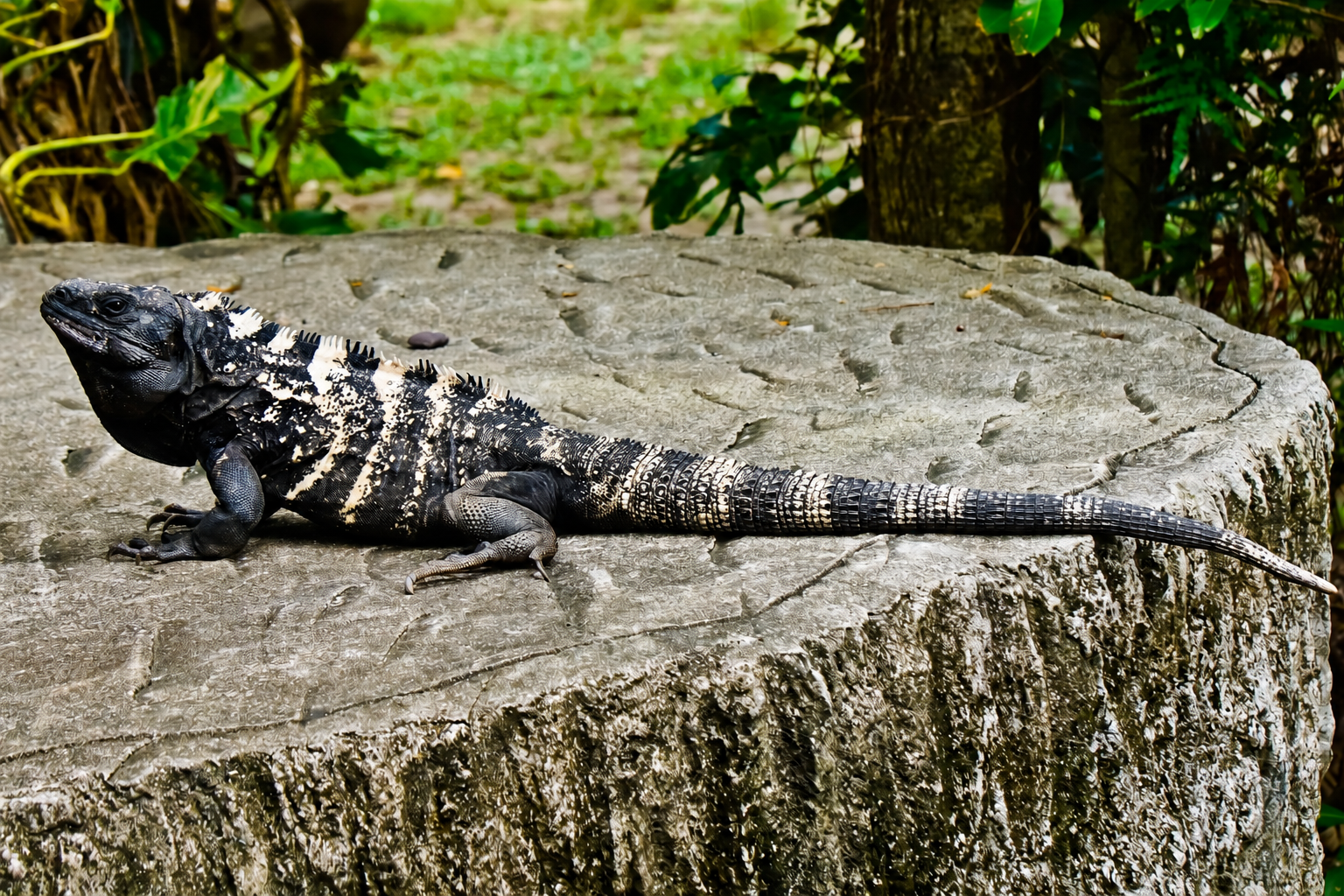
The Roatán spiny-tailed iguana (Ctenosaura oedirhina), also known as de Queiroz’s spiny-tailed iguana, is a stunning species that I personally adore. They resemble mini-pied iguanas with their striking black bodies adorned with white spots and patches. While they are smaller than the Banana, Orange, and Pied iguanas I raise—typically reaching about 17 inches as adults—their hatchlings are actually larger than those of the Ctenosaura pectinata. This is because the mothers produce fewer, but larger, eggs, which often results in hardier hatchlings.
Native Range and Habitat
This species is endemic to the island of Roatán and nearby cays in the Bay Islands of Honduras. They thrive in a variety of environments, ranging from tropical dry forests to suburban areas.
Physical Characteristics
These medium-sized iguanas feature a rounded snout and short crest scales. Males are generally longer and heavier than females, with hatchlings typically measuring 5 to 6 inches long.
Conservation Status
Classified as Endangered by the IUCN, the wild population is estimated at approximately 4,500 individuals. They face significant threats, including habitat loss, fragmentation, predation by domestic pets, and illegal hunting. However, conservation efforts—including research funded by the International Iguana Foundation and private land management—are currently underway to protect this unique species. It is important to note that the Roatán spiny-tailed iguana is distinct from the Mexican spiny-tailed iguana (Ctenosaura pectinata) found in western Mexico.